

Despite only recently having become a father, I have long been shameless in my love for dad jokes. It is perhaps fitting, then, that in Japanese, such jokes are called oyaji gyagu (親父ギャグ), literally, uncle jokes. I’ve been an uncle for a while now.
In any case, one thing I’ve come to love is visual jokes based on puns, portmanteau, or other wordplay in Japanese. I sincerely enjoy these, but they’re decidedly unserious and can certainly be kind of dumb, hence the name.
Still, I love them. I make a new one every now and then. My favorites are below, with explanations. I’ll update this page with new ones as I make them.
These will eventually be made available on t-shirts, tote bags, etc. If you have any specific requests, please get in touch, and please don’t steal my dumb designs.
Quick language note: sometimes Japanese has extended vowel sounds, and in these cases I’ve presented them here in English with a diacritical mark. So, if you see something like ā, read it as an extended vowel.
イタイガー

Itaigā: a combination of itai (exclamation for pain, like the English ouch) and taigā (tiger).
ワンコイン

In Japan, you’ll sometimes see products or services advertised as ワンコイン/wan-koin, a transliteration of the English one coin, meaning you can buy it with only one coin, sometimes ¥100 but more often ¥500.
However, ワン/wan is also the Japanese onomatopoeia for the sound of a dog bark/woof. Which is how we get to the ワンコイン above.
カラスダチ

カラス/karasu (crows) are my favorite birds in Japan. They’re super smart and fascinating to watch.
Japan also has a huge variety of citrus fruits, and among my favorites is the すだち/sudachi.
I combined the karasu and the sudachi to make the karasudachi. As one does.
おすすめバチ
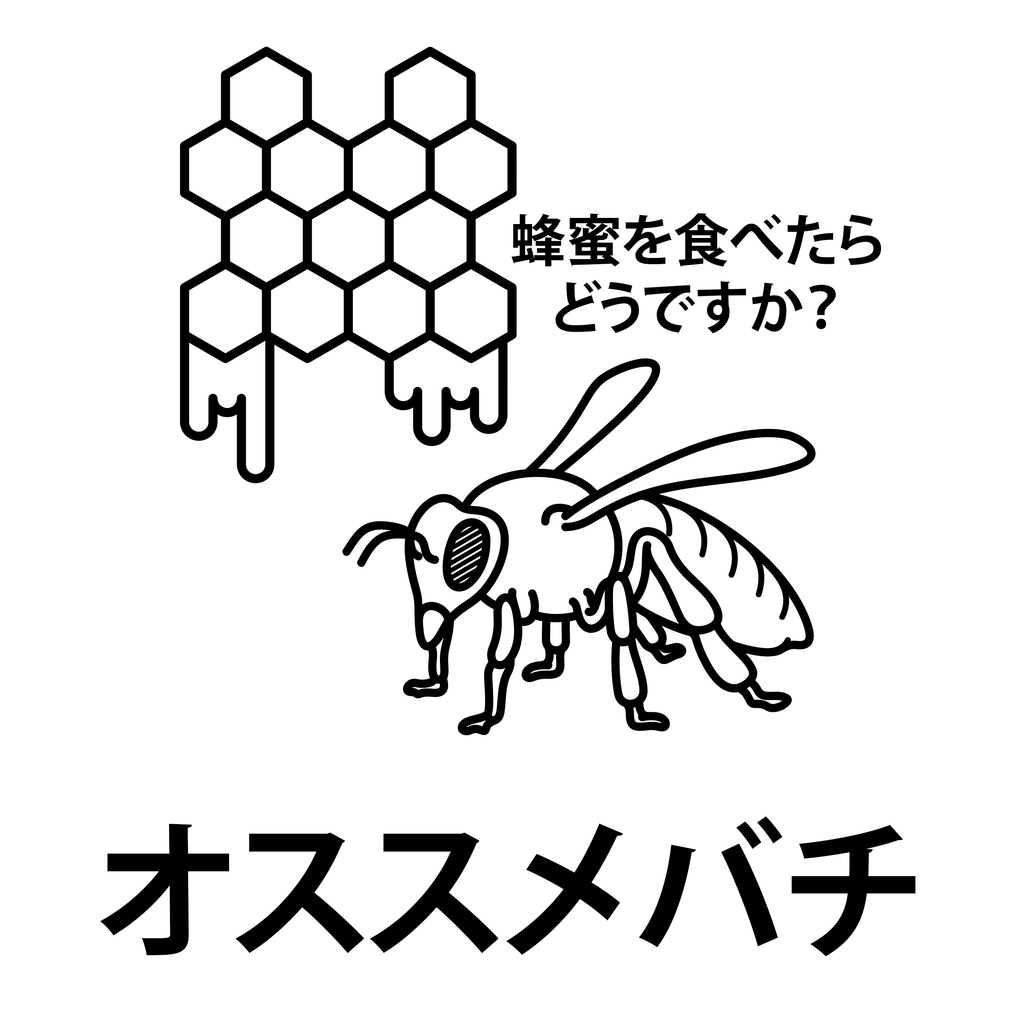
This one requires a little more explanation, but is my favorite so far.
You’ve likely heard of the Asian giant hornet, Vespa mandarinia, but probably by it’s unfortunate nickname, the murder hornet. This much-maligned hymenopteran is commonly called the スズメバチ/suzumebachi. Suzume is sparrow and bachi (or hachi, depending on the usage) is bee/wasp/hornet, so basically it’s a hornet the size of a sparrow. Not really accurate (the Eurasian tree sparrow outweighs the hornet by a factor of 10), but oh well.
One day, though, I saw it written as オオスズメバチ, ōsuzumebachi, with that leading o-sound standing in for the kanji 大 meaning big. This is where the idea began to form.
お勧め/おすすめ/osusume means recommendation, of the sort you might ask for in a restaurant. Ōsuzume and osusume are quite close in sound, which is how we get to オススメバチ/osusumebachi, a bee or hornet with recommendations.
Here, the hornet is saying 「蜂蜜を食べたらどうですか?」, “hachimitsu wo tabetara dou desu ka?” Basically, “How about some honey?”
To be clear, I am well aware that hornets are predatory and do not make honey.
This page last updated 2026-11-13 FRI